Email:
bernal [at] consult-poseidon [dot] com
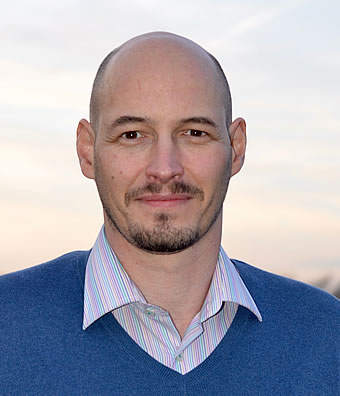
Bernal Vilela
Associate Director
Bernal Vilela is an Associate Director of Poseidon and a fisheries specialist with over 20 years of experience providing technical and advisory support across fisheries management, value chain development and fisheries policy, with a strong focus on small-scale fisheries. Bernal holds a BSc in Marine Sciences from the University of Vigo, a BSc in Environmental Sciences from the University of the Basque Country, and an International Master’s degree in Food, Society and International Food Governance from the Open University of Catalonia. His work combines applied field experience with strategic advisory support for international organisations and development programmes.
Bernal supports fisheries projects across the full cycle, from identification and design to implementation, monitoring and evaluation. He has strong expertise in fisheries value chains, market development, fisheries management and fisheries policy, helping connect better governance with product development, market access and economic opportunities for fishing communities, strengthening livelihoods and improving sector performance through practical, locally grounded solutions.
Bernal has significant international experience, having lived and worked overseas for more than 12 years across Africa and Asia. His advisory work includes supporting fisheries improvement projects in the Philippines and contributing to the FAO’s FISH4ACP and NAVAC programmes, where he has helped strengthen fisheries value chains through improved management systems, product innovation and the creation of new market opportunities.
Bernal works fluently in Spanish, Portuguese, English and French. His additional strengths include stakeholder engagement and the ability to bridge technical fisheries expertise with economic and market-oriented development approaches.
Bernal’s work has included:
EU: Evaluation of the impact of the Maritime Spatial Planning Directive (2014/89/EU) on fisheries and aquaculture in the English Channel and Bay of Biscay. Co-author. (2025).
Sao Tomé and Principe: Conducted the analysis of the coastal pelagic value chain as well as designed and implemented its upgrading strategy, which aims to improve resource and ecosystem management, professionalise the fisheries sector, enhance cold-chain infrastructure, facilitate access to finance, and establish new marketing channels. Constitute a multistakeholder partnership to facilitate the VC governance. Facilitates global knowledge sharing and contributes to FAO guidance on sustainable aquatic value chains (2021 - present).
Global: Contributed to the development of the “FISH4ACP – Developing sustainable aquatic value chains: Practical guidance for analysis, strategy and design” (2024).
The Gambia: Supported the analysis of the mangrove oyster value chain, as well as designed and implemented its upgrading strategy, which aims to improve resource and ecosystem management, develop aquaculture, establish new marketing channels/methods, and improve working conditions and the enabling environment. Constitute a multistakeholder partnership to facilitate the VC governance (2021 - 2025).
The Philippines: Supported the Philippine fishery industry in integrating environmentally friendly practices into seafood value chains through Fishery Improvement Projects (FIPs) to enhance stock sustainability and have better access to the United States markets. Conducted value chain analyses for snapper, grouper and squid in the Calamianes region to inform sustainable management and market interventions and contributed to the development of the blue swimming crab management plan through the creation of a multistakeholder partnership (2018 - 2021).
Equatorial Guinea: Led the World Bank fisheries chapter of Equatorial Guinea’s Diagnostic Trade Integration Study. Conducted a comprehensive diagnosis of the national fisheries sector, assessed its institutional and regulatory landscape, identified opportunities and constraints for export-led growth, and provided recommendations on policy, institutional capacity, and infrastructure (2018).
Equatorial Guinea: Chief Technical Advisor – “Assessment of Marine Fisheries Resources in Equatorial Guinea”. Managed a national project to assess marine fisheries resources and strengthen the capacity of the Ministry of Fisheries (MoF). Provided technical guidance and hands-on training to MoF staff to improve fisheries data collection, monitoring, and management. Established a national sampling program to generate the data required for evidence-based stock assessment and fisheries management. Conducted the first artisanal fleet frame survey in Equatorial Guinea. Trained MoF personnel on sampling techniques, IUU fishing detection and prevention, and PSMA (Port State Measures Agreement) principles. Led annual planning processes, prepared detailed work plans, and oversaw budget execution and financial monitoring. Identified and designed a Technical Cooperation Project (TCP) aimed at improving the artisanal fisheries value chain and enhancing the livelihoods of coastal communities for FAO (2015 - 2016).
Mozambique: Project Manager – “Small-Scale Fisheries and Climate Change”. Led the development and management of a project introducing rights-based artisanal fisheries co-management, using social marketing tools to address climate change impacts and improve small-scale fishers’ livelihoods. Facilitated project planning with Ministry of Fisheries (MoF) agencies; reviewed and aligned project work plans and budgets with national priorities. Adapted Rare’s MSc-level training curricula on social marketing and rights-based fisheries to the Mozambican context. Acted as a focal point with the World Bank, Nordic Development Fund, and partner NGOs operating in Mozambique (2014 - 2015).